
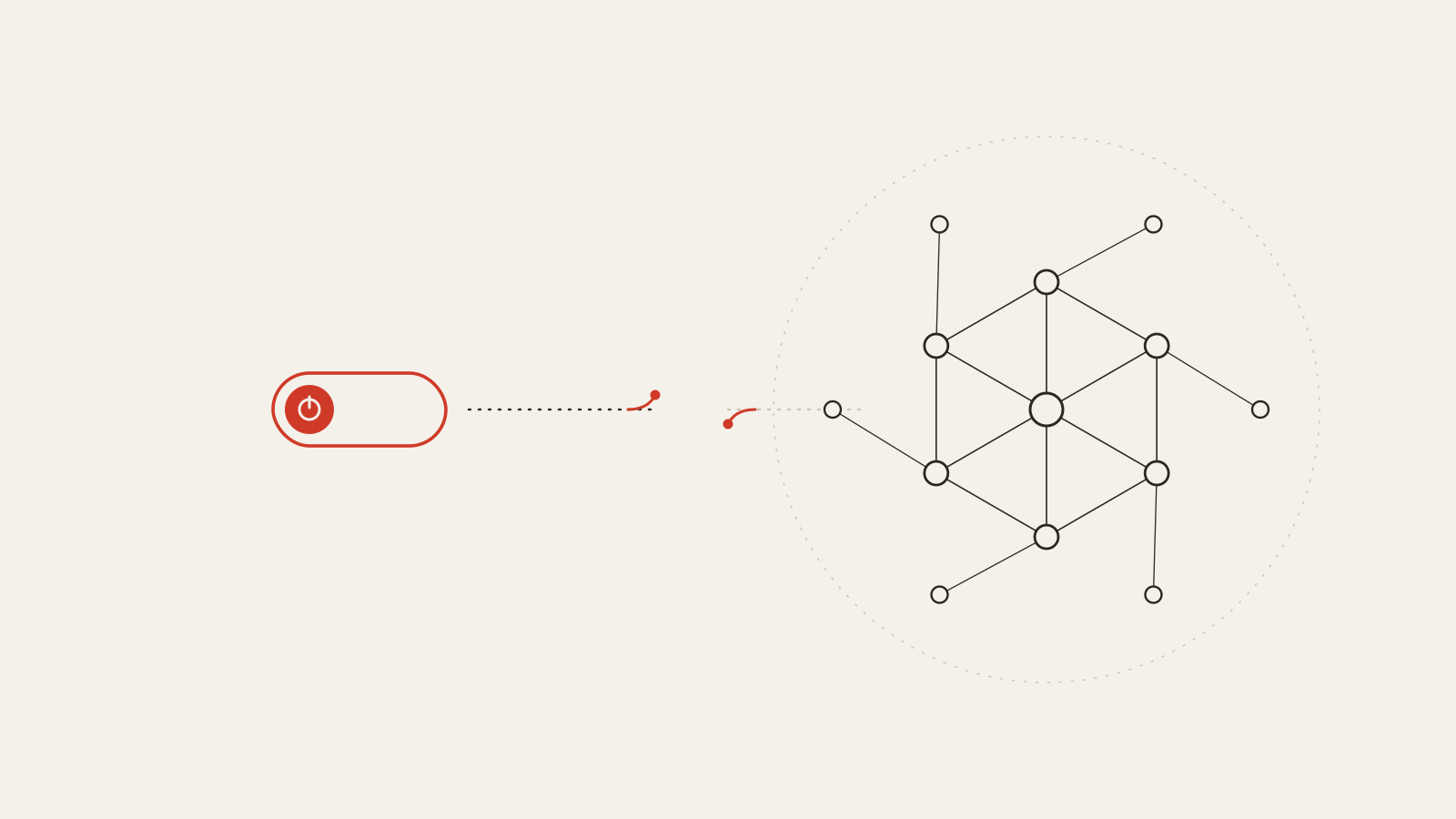
On June 12, 2026, at 5:21pm Eastern Time, a letter from the US government forced Anthropic to switch off two of its models — Fable 5 and Mythos 5 — for all its customers on the planet. Not just the American ones. Everyone. A single email, sent on a Friday afternoon from an office in Washington, went and pulled the plug on companies in Madrid, Berlin and Tallinn that didn’t even know their access was hanging by such a thin thread. If you ever needed proof that technological sovereignty isn’t a Brussels slogan, there it is — delivered by certified mail.
What happened, in plain English
Anthropic lays it out without flinching in its statement. Citing national security authorities, the US government issued an export-control directive to suspend access to Fable 5 and Mythos 5 by any foreign national — anyone of non-US nationality — whether inside or outside the United States. Including Anthropic’s own foreign-national employees.
The trouble with complying with an order like that is that these models don’t have a border running through their insides. There’s no tap that shuts off only the stream flowing to non-Americans. So the net effect, as the company itself admits, was brutal in its simplicity: to guarantee compliance, they had to disable Fable 5 and Mythos 5 for the entire world. Anthropic’s other models keep running, but the two flagships ran aground.
The reason? According to the statement, the government believes it has spotted a method for bypassing Fable’s safeguards — a “jailbreak.” Anthropic says it reviewed the demonstration and found it only surfaced a handful of minor, already-known vulnerabilities — the kind that other publicly available models (it names OpenAI’s GPT-5.5 explicitly) can also find with no trick at all. In essence: asking the model to read a codebase and fix its flaws. The very thing the defenders who keep systems standing do every single day.
Anthropic complies with the order, but disagrees with Nordic politeness: pulling a model deployed to hundreds of millions of people because of a narrow, non-universal jailbreak is, they say, a standard that — applied across the whole industry — “would essentially halt all new model deployments.” And they close with a line worth framing: the government should be able to block unsafe deployments, yes, but through “a statutory process that is transparent, fair, clear, and grounded in technical facts.” This action, they argue, meets none of those four adjectives.
That’s the news. Now, the red pill.
The nerve that runs through another country
There’s a distinction in biology that I can’t shake: the difference between an organ and a prosthesis. An organ is irrigated, innervated, woven into your body; it answers to your nervous system. A prosthesis, however sophisticated, depends on whoever holds the remote control. It works beautifully… until it doesn’t, and that’s when you discover the switch was never in your hand.
Europe has spent years building its digital economy on prosthetics. Magnificent prosthetics, sure — the cloud, the models, the chips, the undersea cables — but governed by a central nervous system that lives in another jurisdiction. The Fable case is the clinical demonstration of what that means. It took no cyberattack, no trade war, no sanction aimed at Europe. A single American national-security concern, communicated on a Friday, was enough for a Dutch hospital, a French insurer or a Spanish startup to lose, in one stroke, a tool they had woven into their processes. No warning, no appeal, no vote.
And let me underline something so we don’t slide into off-the-shelf anti-Americanism: the villain here is not Anthropic. The company did what any firm subject to US law has to do, and on top of that it protested publicly. The problem is neither this particular company nor this particular administration. The problem is structural: when the intelligence layer your economy is built on ultimately answers to another country’s national-security authorities, your sovereignty has a single point of failure. And single points of failure, in nature, are the first thing that kills an organism.
What evolution knows about dependency
Nature is merciless with absolute dependencies. A parasite tied to a single host goes extinct when that host falls ill. A species with only one food source vanishes when that food runs short. Resilience, by contrast, is almost always built on redundancy and autonomy: having more than one source, controlling your own vital processes, never outsourcing your breathing to a third party.
The systems that survive shocks are the ones with reflexes of their own. When you pull your hand from the fire, you don’t consult a remote server: the reflex arc closes in your spinal cord, milliseconds before the brain even finds out. That’s biological sovereignty — the ability to react without asking permission from an external authority.
Europe, right now, doesn’t have that reflex arc in the digital realm. It has to send the signal to another continent and wait for a reply. And the Fable case proves that signal may never come back.
The uncomfortable part: this isn’t protectionism, it’s physiology
Here’s where I have to defend the thesis with no hedging, because I know it sounds like a speech at an industrial trade fair. When someone says “European technological sovereignty,” half the room pictures subsidies to national champions that never take off, red tape, an Airbus of AI that arrives late and overpriced. That’s a legitimate critique and worth taking seriously.
But the Fable case changes the terms of the debate. We’re not talking about protecting industries out of pride, or about competing with Silicon Valley to see who’s biggest. We’re talking about operational continuity. About a service your hospitals, banks and public administrations depend on not being switchable-off from the outside for reasons that don’t even concern you. That’s not economic nationalism: it’s the same logic by which a country doesn’t buy all its wheat from a single foreign supplier, nor wire its entire power grid to one plant on the far side of the border.
And let’s be fair to the other side of the argument, because there is one. Autonomy carries a real cost. Building your own compute capacity, models trained in Europe, data centers on European soil and under European law, is hugely expensive, slow, and will probably yield — for years — models worse than the American or Chinese ones. Anyone who claims otherwise is selling smoke. The honest question isn’t “European model or American model?” — the American one wins almost every time. The question is: “would I rather have the best model with a switch in Washington, or a model one rung down whose switch is in my own hand?” The Fable case is the first serious warning that this second question is no longer theoretical.
What’s sensible, almost certainly, is not digital autarky — that would be amputating yourself to avoid depending on a prosthesis. What’s sensible is sovereign redundancy: keep using the best the world has to offer, wherever it comes from, but hold an organ of your own — irrigated, under European jurisdiction — capable of sustaining vital functions when someone else’s remote control decides, on a Friday afternoon, that today’s not the day.
The future I don’t want (and that’s already peeking through)
Let’s picture the dystopian script — that’s what the red pill is for. The year is 2030. Artificial intelligence is no longer a tool you use: it’s the connective tissue of everything. It diagnoses, hires, allocates credit, runs the power grid, translates justice itself. And that tissue, in Europe, is still mostly a rented prosthesis.
One day — not out of malice, but through the cold logic of someone else’s national security — the flow gets cut. Not entirely, not all at once: just enough to remind everyone who’s in charge. A capability disabled here, a model that stops being available there, a service level selectively degraded. Europe then discovers it doesn’t control its own metabolism, that it breathes through an external lung, and that the price of every breath is renegotiated at a table where it has no seat.
No technological coup is required. Mere dependency suffices, exercised with the casualness of someone flicking off a light they consider theirs. The Fable case, seen from Europe, isn’t the dystopia: it’s the dress rehearsal. The good news about dress rehearsals is that there’s still time to rewrite the ending.
What I’m taking home
Three ideas, in case this is all that sticks:
Sovereignty goes unnoticed until it’s lost. Like oxygen, or balance. On the day it’s working, it looks like a needless expense. On the day it fails — a Friday at 5:21pm — you discover it was the only thing holding the building up.
Redundancy, not autarky. The smart move isn’t to wall Europe off from the world, but to stop having a single point of failure. Use the best models on Earth and keep a capacity of your own that nobody can switch off from outside. Like a body that breathes through two lungs, not one rented one.
The switch matters more than the horsepower. We can argue for years about whether the European model will be as good as the American one. That’s the wrong argument. The underlying question is who has their hand on the switch. And the Fable case just answered it with a clarity no Brussels lobby could ever have achieved.
In mythology, the serpent strikes the heel because it knows where the weak spot is. Europe’s has been in plain sight for years, and this week someone — without meaning to — pointed right at it. Let’s hope we know how to look.
Red pill swallowed.
Sources:


Leave a Reply