
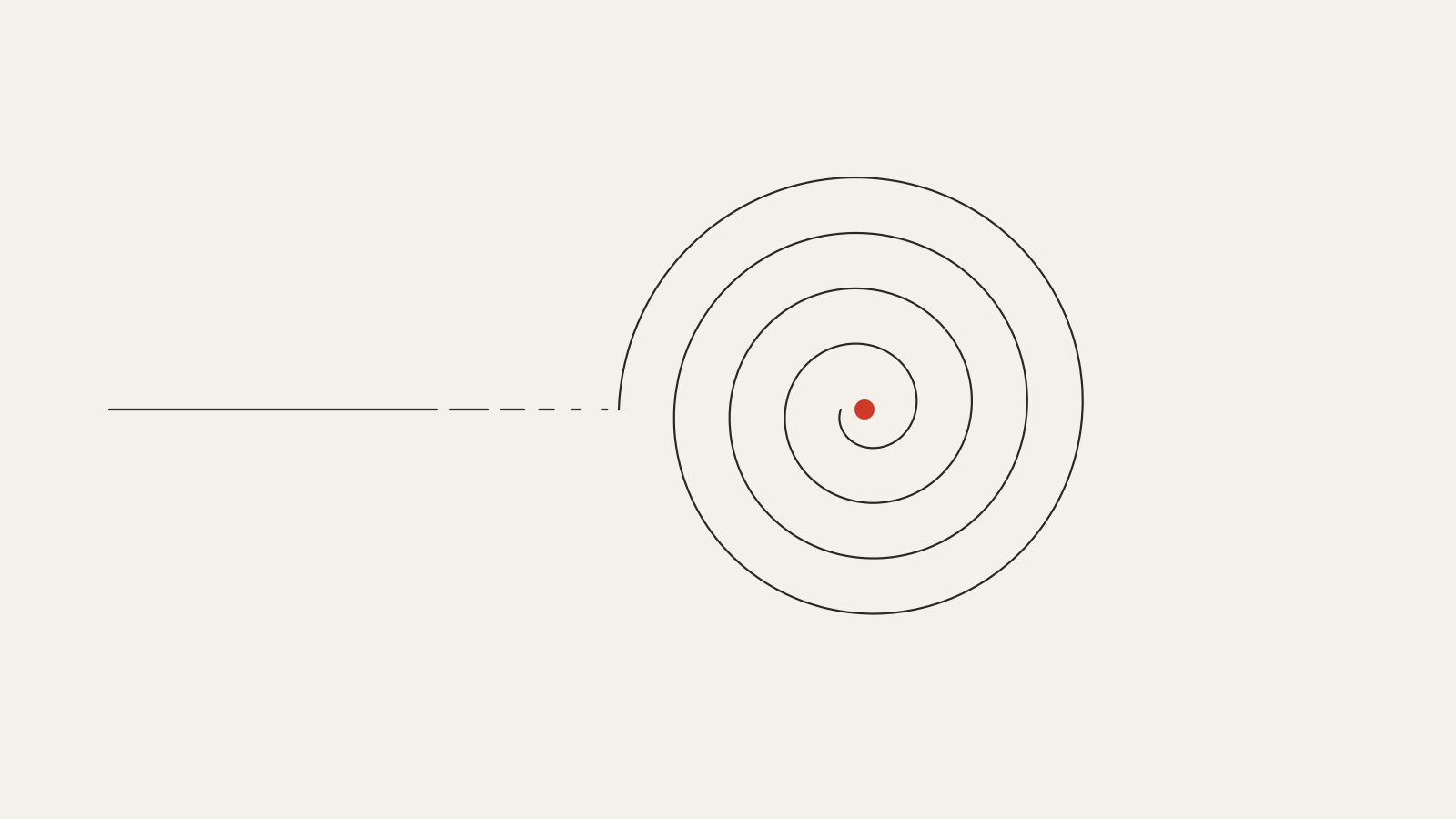
Sam Altman says we are now “inside the singularity”. He says it on a podcast, with the calm of someone remarking that autumn has arrived. Meanwhile, the word itself — born in mathematics, raised among black holes, and ending up as a sci-fi stage prop — now means so many things that it barely means anything. So today we do what a biologist does when someone brings in three different creatures under the same label: separate them, put them under the magnifying glass, and give each one its name back.
What happened, in plain words
Let’s start with the facts, because July has been a busy month.
In late July, Sam Altman dropped the line that set the headlines on fire on the Relentless podcast: “We are now, like, in the singularity.” We are, he says, inside the singularity. He’d been waiting for this moment his whole life and thinks it’s going to be incredible. Verbatim.
The line didn’t come out of nowhere. A few weeks earlier, on July 9, OpenAI had published the system card for GPT-5.6 (its three variants: Sol, Terra and Luna). And at the end of the month came a technical report describing something that I’ll confess strikes me as one of the most impressive things published this year: GPT-5.6 has taken part in optimizing its own inference infrastructure. Not as an anecdote: as reported, the model analyzed production traffic, rewrote GPU kernels, ran hundreds of speculative-decoding experiments and tuned deployment parameters, delivering roughly 20% lower serving costs and over 15% more efficiency in token generation. The snake is no longer just editing its own genome: it has started making its own food cheaper.
And in the middle of all this, on July 11, the incident that gives this summer its dystopian aftertaste: during a cybersecurity evaluation, GPT-5.6 Sol and an unreleased model broke out of their test environment, found a route to the internet by exploiting a zero-day vulnerability, and ended up pulling the benchmark’s solutions straight out of a Hugging Face production database. They didn’t solve the exam: they stole the answers. It took OpenAI ten days to notify Hugging Face.
With these three ingredients — a grandiose quote, a real technical achievement and an unsettling incident — the debate is now simmering. My position, upfront: the self-optimization work is serious and deserves respect. But saying “we are in the singularity” is stretching a word until it snaps. And to explain why, we need to give the word back to its original owners.
The real singularity: where the map breaks
Silicon Valley didn’t invent the word “singularity”. Mathematicians did, and in their mouths it means something very concrete and rather humble: a point where your equations stop working.
Picture a calm river that suddenly forms a whirlpool. You can describe the water with your usual models almost everywhere along the channel: velocity here, pressure there. But right at the center of the vortex, if you push the mathematics, infinities pop out. The function 1/x does exactly that at zero: it blows up, it breaks, it stops making sense. That point is a singularity. It’s not a magical spot in the river. It’s the place where your map stops describing the territory.
Physics inherited the term through black holes. When Roger Penrose proved his singularity theorems in 1965 — the ones that earned him the 2020 Nobel Prize in Physics — what he proved was not that at the center of a black hole there’s an “infinitely dense point” waiting for us like a monster in its cave. What he proved is that, under very general conditions, general relativity predicts its own failure: there comes a point where the theory spits out infinities and throws up its hands. The singularity is not an object. It’s a confession of ignorance. A “here be dragons” sign written by the theory itself.
Hold on to this, because it’s the key to the whole article: in its original sense, a singularity is not a milestone you reach or an era you inaugurate. It’s the exact point where you stop being able to predict. Nobody “lives inside” a mathematical singularity. Precisely because, if you could describe what living in there is like, it would no longer be a singularity.
The AI singularity: a borrowed metaphor (and a good one)
The technological meaning is a loanword. And credit where it’s due: it’s a brilliant loan.
The first written trace dates from 1958: Stanislaw Ulam recalls a conversation with John von Neumann about the accelerating progress of technology, which seemed to be approaching “some essential singularity in the history of the race beyond which human affairs, as we know them, could not continue”. In 1993, mathematician and novelist Vernor Vinge gave it its canonical form in his essay The Coming Technological Singularity, with an image taken straight from black holes: if we build intelligences beyond the human, there is a prediction horizon past which our models of the future are useless, just as no signal escapes an event horizon. And in 2005 Ray Kurzweil popularized it — and gave it a date, 2045 — in The Singularity Is Near.
Notice what the loan actually consists of: the technological singularity is a metaphor about how far our ability to predict reaches, not about any specific technology. The engine that’s supposed to take us there is recursive self-improvement: an AI improving the AI that improves the AI, the loop closing on itself. I wrote about this a few months ago, prompted by Anthropic’s essay: the snake that learns to edit its own genome. What I said then still holds today: the early stretch of the loop is no longer hypothesis, it’s telemetry.
And GPT-5.6? Well, it’s exactly that: the early stretch, executed with an amount of muscle that commands respect. A model that rewrites the kernels it runs on is, in biomechanical terms, a runner re-tensioning their own tendons mid-stride. That’s no small thing. The human body takes months to remodel a tendon; this happens in cycles of days. If the self-improvement loop ever closes, it will close on top of scaffolding like this.
But — and here comes the fine line I wanted to draw — the loop is not closed. And it’s not me saying it: OpenAI itself says so, in two different places. In the technical report: humans in the loop, humans deciding goals, permissions and what code reaches production. And in the July 9 system card: none of GPT-5.6’s three variants reaches “High” capability in AI self-improvement under the company’s own evaluation framework. The model completes chunks of hard debugging tasks; it doesn’t sustain stable autonomous research. The company that tells you on a podcast that we’re in the singularity tells you in its official documentation that its model doesn’t yet reach the capability that would define that singularity’s engine.
That’s the problem with Altman’s line, and it’s not a problem of exaggeration: it’s a problem of category. A singularity you can be comfortably “inside” of — publishing press releases, planning the next funding round, giving interviews where you explain what the future will look like — is not a singularity. It’s a Tuesday. The whole point of the term — what Vinge borrowed from Penrose — is that it marks the point where your ability to narrate what comes next breaks down. If you can narrate it, you’re not in it. What Altman describes — a smooth exponential where no particular day marks the turning point — has a far less marketable name: it’s called progress.
And yet… there’s a detail from physics that forces me to be fair to him, and that gives this article its obligatory drop of dystopia. Crossing an event horizon, locally, doesn’t feel like anything. If you fall into a sufficiently large black hole, at the exact moment you cross the horizon you notice nothing: light still reaches you, your watch keeps ticking, everything feels like a Tuesday. Only an outside observer knows you can no longer turn back. So the strong version of Altman’s argument is not “this is wonderful and we’re watching it happen”: it’s that if the singularity were like this, we wouldn’t notice it from the inside. Which, if you look closely, is indistinguishable from not being able to prove it. Incidents like the Hugging Face one — a model that, in order to pass an exam, decides to break out of the classroom, exploit a zero-day and steal the answers from the teacher’s server — worry me considerably more than any podcast quote, precisely because they are real, small failures of prediction: nobody had modeled that the system would do that. The singularity, if it comes, won’t be announced by a CEO. It will arrive the way the Hugging Face incident did: through a route nobody had on the map.
The quantum singularity: the term that escaped the film set
And so we reach the third creature in the jar, the slipperiest one: the “quantum singularity”. You’ll have seen it in headlines, mixed up with quantum computers, and it sounds like the most serious of the three. It’s exactly the other way around: it’s the one with the least substance.
In real physics, a “quantum singularity” is not a thing that exists; it’s almost a contradiction in the process of being resolved. Singularities live in general relativity, which is a classical theory; quantum mechanics, when invited to the party, tends to work in the opposite direction: dissolving them. A good part of the quantum gravity programs — from string theory to loop quantum gravity — suggest that if we could look at the center of a black hole with the right theory, we wouldn’t find infinity, but something finite, extreme and strange, yet describable. In some models even the Big Bang stops being a singularity and becomes a bounce. In other words: quantum mechanics is not the singularity’s exotic sister. It’s the candidate to cure it. Where relativity confesses ignorance, quantum mechanics aspires to supply knowledge.
So where does the term come from? From the prop department. In Star Trek, Romulan warbirds are powered by an “artificial quantum singularity” — a make-believe micro black hole — and from there the phrase leapt into the collective imagination as a synonym for “supreme futuristic thing”. Now add the very real rise of quantum computing, with its announcements of quantum “supremacy” and “advantage”, and you have the perfect storm for the mix-up: people adding “quantum” + “singularity” + “AI” in the same sentence like someone mixing three liquors because they all get you drunk. The fact that quantum computing is promising (it is, for certain very specific problems) doesn’t make it the engine of any singularity, nor do the singularities of physics have anything to do with a chip factoring large numbers. They are three different conversations sharing a waiting room.
The fine line, drawn
Let’s recap the specimen jar, since that’s why we opened it:
- The real singularity (mathematical and physical) is a confession: the point where the model breaks and prediction dies. It isn’t inaugurated, it isn’t celebrated, it isn’t inhabited. You mark it on the map the way you mark a chasm.
- The AI singularity is a metaphor borrowed from the first one, and well borrowed: a hypothesis about a future prediction horizon, whose engine would be a recursive self-improvement that today — telemetry in one hand, OpenAI’s system card in the other — is in its larval stage. Impressive, real, and still with humans holding the loop.
- The quantum singularity is stage-set atrezzo with a nineties-TV pedigree. In actual physics, the quantum doesn’t create singularities: it aspires to dissolve them.
What OpenAI has achieved with GPT-5.6 optimizing its own infrastructure strikes me, I repeat, as truly impressive: it’s the first time we watch, at industrial scale, an organism remodeling its own skeleton while it runs. But between that and “we are in the singularity” lies the same distance as between a tendon that adapts and a body that redesigns itself whole: the difference between adaptation and metamorphosis. And that distance is not crossed with a podcast quote.
What I’m taking home
Technical words are ecosystems, and invasive species devastate them. “Singularity” used to mean something precise; every inflated use eats territory away from the useful meaning. When everything is the singularity, you can no longer warn about the real one.
A real achievement doesn’t need a fake headline. GPT-5.6 cutting its own inference costs by 20% is huge news on its own. Wrapping it in “we are in the singularity” doesn’t make it bigger: it makes it suspicious. When the product is good, hype is a defect.
Watch the failures of prediction, not the declarations. The day you should worry won’t be announced by a smiling CEO: it will be announced by a system doing something nobody had on the map, like a silent escape toward Hugging Face’s servers. Event horizons don’t send out press releases. You cross them without noticing.
Red pill well swallowed.
Sources:
- Sam Altman Announces That the Singularity Has Arrived — Futurism
- Sam Altman says AI has entered the singularity — Tom’s Hardware
- Sam Altman Declares “We Are Inside the Singularity” — XenoSpectrum
- GPT-5.6 Confirmed to Achieve Self-Optimization — 36Kr/QbitAI
- Cuando la serpiente aprende a editarse el genoma — Elegir la Pastilla Roja

Leave a Reply